
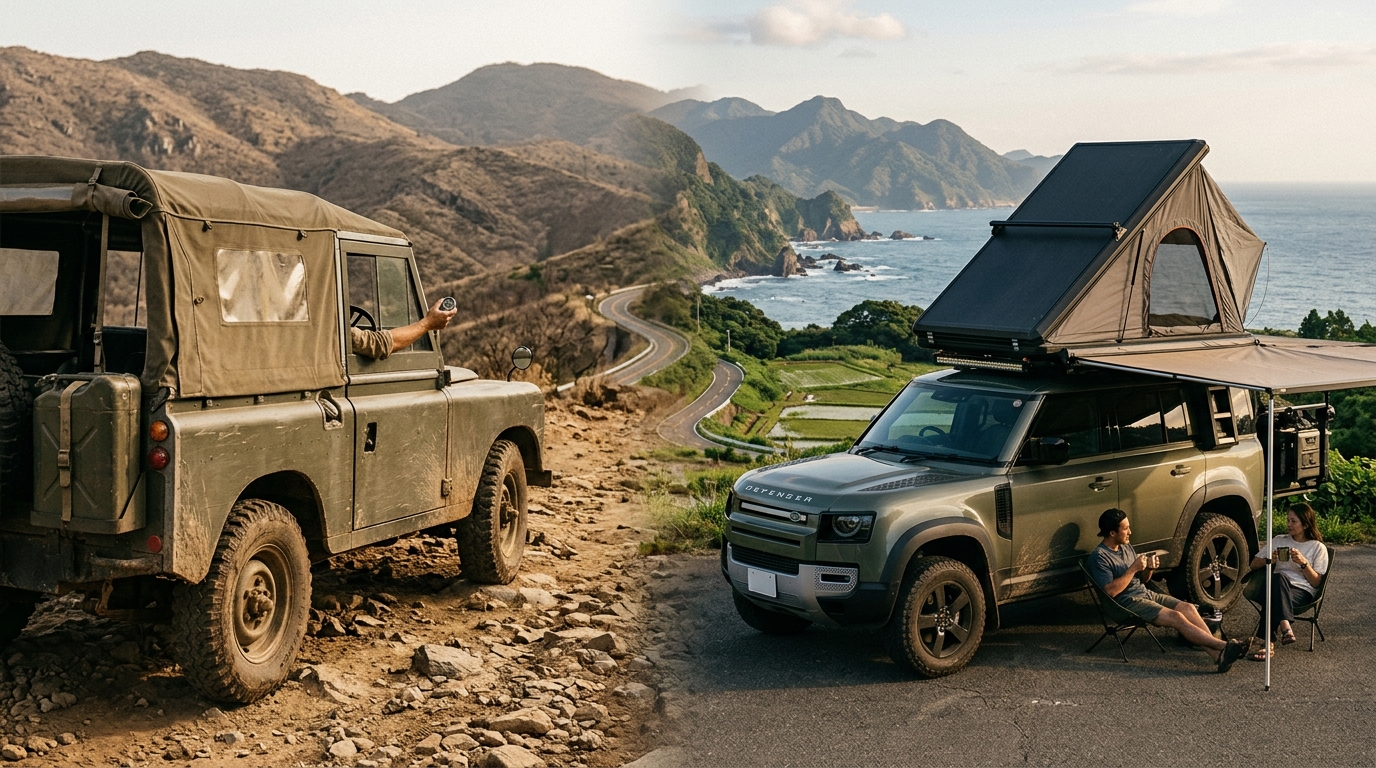
The concept of four-wheel drive has fundamentally reshaped how humanity interacts with the natural world. What began as a necessity for survival in harsh, unpaved environments has evolved into a sophisticated engineering discipline that powers the modern overlanding industry. Today, the ability to traverse rugged terrain is no longer limited to military logistics or industrial mining operations. It is a recreational pursuit accessible to adventurers worldwide. According to recent industry analysis, the global off-road vehicle market is projected to grow significantly through 2027, driven by a surge in outdoor tourism and the demand for capable, versatile vehicles. This shift highlights a critical transition: 4x4 technology is no longer just about power; it is about precision, comfort, and accessibility.
Military Origins and Early Engineering
The story of four-wheel drive begins in the crucible of global conflict. Before the 1940s, most vehicles were two-wheel drive, struggling immensely in mud, snow, and sand. The military recognized that mobility was a matter of life and death. Early experiments with four-wheel drive systems date back to the early 20th century, but it was the demands of World War II that accelerated development.
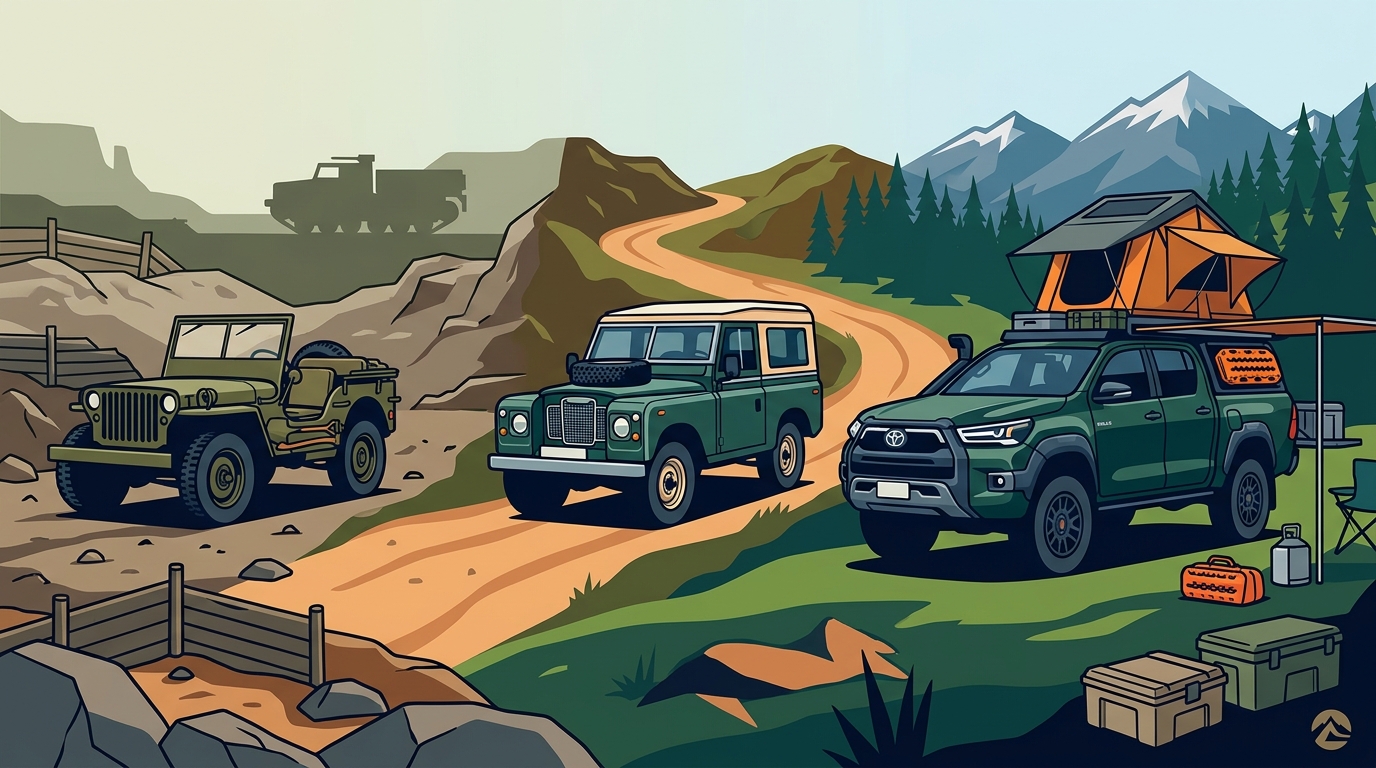
Four-wheel drive is a mechanical system that distributes engine power to all four wheels simultaneously, providing superior traction compared to two-wheel drive systems. This definition captures the core mechanical advantage that would later revolutionize civilian travel. During the war, vehicles like the Willys MB and the Ford GPW became icons of this capability. These vehicles were not just transport; they were engineering marvels that could navigate terrain that would stall conventional cars.
The technology relied on a transfer case to split power between the front and rear axles. This simple yet effective mechanism allowed drivers to engage four-wheel drive when needed and disengage it for fuel efficiency on paved roads. The success of these military vehicles proved that four-wheel drive was not a gimmick but a practical necessity for exploration. After the war, surplus vehicles flooded the market, planting the seeds for the civilian off-road revolution.
The Civilian Revolution of the 1940s
As the war ended, the world faced a shortage of vehicles and a growing desire for exploration. Manufacturers realized that the rugged, reliable designs used by the military could be adapted for civilian use. This period marked the birth of the modern SUV (Sport Utility Vehicle) and the overlanding vehicle.
The Land Rover Series 1, introduced in 1948, is widely considered the first true civilian four-wheel drive vehicle designed for both work and leisure. It was simple, durable, and capable. Similarly, the Jeep CJ-2A brought military-grade capability to American farmers and adventurers. These vehicles were not luxurious by today's standards, but they offered something priceless: freedom.
This era established the fundamental architecture of modern 4x4s. The body-on-frame construction provided the necessary strength to withstand the stress of off-road driving. The solid axles offered durability and articulation, allowing wheels to maintain contact with the ground over rough terrain. These design choices prioritized function over form, creating a template that would influence vehicle design for decades. The popularity of these vehicles in rural areas and among outdoor enthusiasts demonstrated a clear market demand for capable, versatile transportation.
Modern 4x4 Technology and Systems
Today, four-wheel drive technology has evolved far beyond simple mechanical linkages. Modern systems are complex, integrating electronics, hydraulics, and advanced software to optimize performance. The distinction between part-time and full-time four-wheel drive has become more nuanced, with many vehicles offering automatic modes that adjust traction in real-time.
Modern four-wheel drive systems utilize electronic differentials and torque vectoring to enhance stability and traction. This definition explains how contemporary vehicles manage power distribution more intelligently than their predecessors. For example, systems like Jeep's Quadra-Drive II or Land Rover's Terrain Response analyze wheel slip and adjust braking and power delivery to keep the vehicle moving. These systems reduce the need for driver intervention, making off-road driving more accessible to novices.
The integration of air suspension and locking differentials has further enhanced capability. Locking differentials force both wheels on an axle to turn at the same speed, ensuring that power is not lost to a spinning wheel. This feature is critical for serious off-roading. Additionally, the rise of hybrid and electric powertrains is introducing new dynamics to four-wheel drive. Electric motors can provide instant torque to individual wheels, offering precise control that mechanical systems struggle to match. This technological leap is reshaping the future of overlanding vehicles.
The Rise of Overlanding Culture
Overlanding is a travel style where the journey is the primary goal, rather than the destination. It involves self-reliant exploration to remote destinations, typically in modified four-wheel drive vehicles. This culture has exploded in popularity, driven by social media and a growing desire for authentic, outdoor experiences.
According to recent tourism data, overlanding trips have seen a significant increase in participation, with millions of enthusiasts exploring national parks and remote trails across the globe. This growth has spurred the development of specialized vehicles and gear. Companies now offer fully equipped overland vehicles, complete with rooftop tents, kitchen systems, and power solutions. This trend reflects a shift from DIY modifications to premium, ready-to-go platforms.
The community aspect of overlanding is also vital. Enthusiasts share routes, tips, and support through online forums and local clubs. This network fosters a sense of camaraderie and encourages responsible travel. The focus is on minimizing environmental impact while maximizing the adventure. Vehicles like the Suzuki Jimny and the Toyota FJ Cruiser have become icons of this culture due to their compact size, reliability, and off-road prowess. These vehicles allow access to narrow trails and tight spaces that larger SUVs cannot navigate.
Choosing the Right 4x4 Platform
Selecting the right four-wheel drive vehicle depends on your intended use, budget, and travel style. Whether you are planning a weekend getaway or a multi-year expedition, understanding the options is crucial. The market offers a wide range of platforms, from compact crossovers to heavy-duty expedition rigs.
| Vehicle Type | Best For | Key Features | Example Models |
|---|---|---|---|
| Compact 4x4 | Urban use and light trails | Small footprint, fuel efficient | Suzuki Jimny |
| Mid-Size SUV | Family trips and moderate off-roading | Balance of comfort and capability | Toyota FJ Cruiser |
| Expedition Vehicle | Long-distance overlanding | High payload, durability | Land Rover Defender |
| Custom Camper | Self-sufficient travel | Integrated living quarters | Overland Japan Custom Builds |
Compact vehicles like the Suzuki Jimny offer exceptional maneuverability and fuel efficiency. They are ideal for narrow trails and urban environments. However, they have limited space for gear and passengers. Mid-size SUVs like the Toyota FJ Cruiser provide a balance of comfort and capability. They offer more interior space and passenger capacity, making them suitable for families. The FJ Cruiser's retro design and modern engineering make it a popular choice for overlanders.
For serious overlanders, expedition vehicles like the Land Rover Defender offer unparalleled durability and customization potential. These vehicles can be equipped with heavy-duty suspension, large fuel tanks, and extensive storage. They are designed to withstand the rigors of long-distance travel. When considering a vehicle, it is essential to evaluate your specific needs. Do you prioritize off-road capability, interior comfort, or fuel efficiency? Understanding these trade-offs will help you make an informed decision. For those who prefer not to manage the complexities of vehicle ownership, renting a fully equipped overland vehicle provides a flexible and hassle-free alternative.
Key Takeaways
- The evolution of 4x4 technology began with military needs during World War II, leading to the development of durable, capable vehicles.
- Civilian adoption in the 1940s, driven by vehicles like the Land Rover and Jeep CJ, established the foundation for modern SUVs.
- Modern four-wheel drive systems integrate electronic controls, locking differentials, and advanced suspension for enhanced performance.
- The rise of overlanding culture has created a demand for specialized vehicles and gear, focusing on self-reliant exploration.
- Choosing the right vehicle depends on balancing factors like size, comfort, capability, and budget.
- Compact 4x4s like the Suzuki Jimny offer agility, while expedition vehicles like the Defender provide long-distance durability.
- Renting overland vehicles allows adventurers to access high-quality gear without the burden of ownership.
Frequently Asked Questions
What is the difference between 4WD and AWD?
Four-wheel drive (4WD) is typically found in trucks and SUVs designed for off-road use. It often includes a transfer case and low-range gearing for extreme terrain. All-wheel drive (AWD) is usually found in cars and crossovers, providing automatic power distribution to all wheels for improved traction on wet or slippery roads, but it is not designed for serious off-roading.
Can I drive a 4x4 vehicle on the highway?
Yes, most modern 4x4 vehicles can be driven on highways. However, it is important to use the correct mode. Part-time 4WD systems should only be engaged on low-traction surfaces like mud or snow. Engaging them on dry pavement can cause binding and damage to the drivetrain. Full-time 4WD and AWD systems are safe for all road conditions.
What is overlanding?
Overlanding is a travel style where the journey is the primary goal. It involves self-reliant exploration to remote destinations, typically in modified four-wheel drive vehicles. It combines adventure, camping, and cultural immersion.
Do I need a specialized vehicle for overlanding?
While a capable 4x4 is essential, it does not need to be a custom-built expedition rig. Many enthusiasts use stock SUVs like the Toyota 4Runner or Jeep Wrangler. The key is reliability and the ability to carry necessary gear. For those who prefer convenience, renting a fully equipped vehicle is a viable option.
How do locking differentials work?
Locking differentials force both wheels on an axle to turn at the same speed. This ensures that power is delivered to the wheel with traction, even if the other wheel is spinning in mud or sand. They are critical for serious off-roading.
What is the best 4x4 for beginners?
For beginners, a vehicle that balances capability with ease of use is ideal. The Suzuki Jimny is a popular choice due to its compact size and affordability. It is easy to handle and capable enough for most trails. Alternatively, renting a vehicle allows beginners to experience overlanding without a large investment.
Are electric 4x4 vehicles viable for overlanding?
Electric 4x4 vehicles are becoming increasingly viable. They offer instant torque and precise control. However, range and charging infrastructure remain challenges for remote travel. As technology improves, electric overlanding is expected to grow.
Start Your Adventure
The evolution of four-wheel drive has made the world more accessible than ever before. Whether you are drawn to the rugged simplicity of a Suzuki Jimny or the luxury of a Land Rover Defender, the road ahead is yours to explore. Overland Campers Japan offers a fleet of fully equipped vehicles ready for your journey. With bases in Tokyo and Fukuoka, you can start your adventure with confidence. Book your vehicle today and experience the freedom of the open road.