
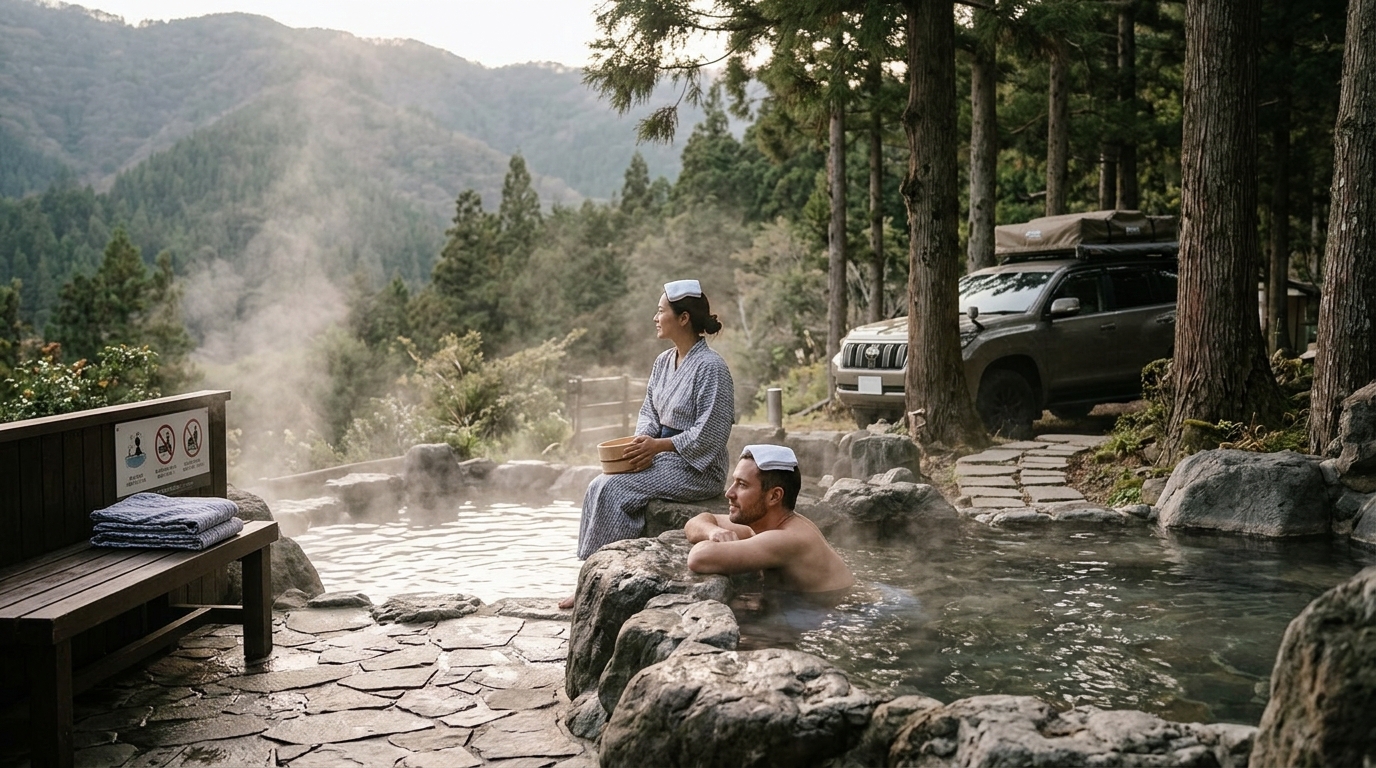
Overland Campers Japan travellers can access Japan's extensive network of public bathhouses, ryokan day passes, and outdoor onsen by researching local facilities and following strict bathing etiquette. This guide explains how to locate these thermal sites, understand the rules, and integrate them into your overland itinerary. Whether you are parked at a remote auto-camp or driving through a rural town, knowing how to use a hot spring is essential for a comfortable and respectful trip.
Understanding the Onsen System
An onsen is a natural hot spring facility that provides bathing and relaxation in mineral-rich water. In Japan, these are not merely luxury amenities but a fundamental part of daily life and cultural practice. The water is sourced from underground geothermal activity, and the temperature is carefully regulated for safe bathing. Understanding this distinction is crucial because it dictates the strict etiquette required of all users.
There are two main types of facilities you will encounter. The first is the public bathhouse, often called a sentou, which is a local community facility. The second is the ryokan or hotel onsen, which is attached to accommodation. For campers, the public bathhouse is often the most accessible and affordable option. It is important to note that most onsen do not allow clothing in the water. You must wash thoroughly before entering the bath. This rule exists to keep the mineral water clean for the next person.
Overland Campers Japan provides guidance on this etiquette during your pre-trip briefing. We emphasize that the onsen is a place of silence and cleanliness. You will not see towels in the water, and you will not see soap or shampoo in the bath. These items stay in the washing area. By understanding the system, you avoid the common mistake of bringing a towel into the pool, which is a significant cultural faux pas.
Locating Facilities Near Your Camp
Finding a hot spring near your camping spot requires a bit of planning. In rural areas, onsen are often located in small towns or villages rather than in the wilderness. You should look for towns with a population of a few thousand, as these are likely to have a public bath. Use a map application to search for 'onsen' or 'public bath' in the nearby area. Many of these facilities are open from early morning until late evening, providing a convenient mid-day or evening activity.
For those camping in more remote locations, you may need to drive a short distance to reach the nearest town. This is a great opportunity to explore local shops and buy fresh produce for your evening meal. The drive itself is often scenic, offering views of the Japanese countryside. Overland Campers Japan recommends checking the opening hours of the facility before you depart from your camp. Some smaller bathhouses may close earlier than expected, especially on weekdays. Planning your arrival time ensures you do not miss the window for bathing.
Another useful resource is the local tourism board. Many towns with onsen have a visitor center that can provide information on the best facilities and any special events. These centers often have English-speaking staff or translated materials. They can also advise on the best time to visit to avoid crowds. By using these local resources, you can find hidden gems that are not widely advertised in international travel guides.
Mastering Bathing Etiquette
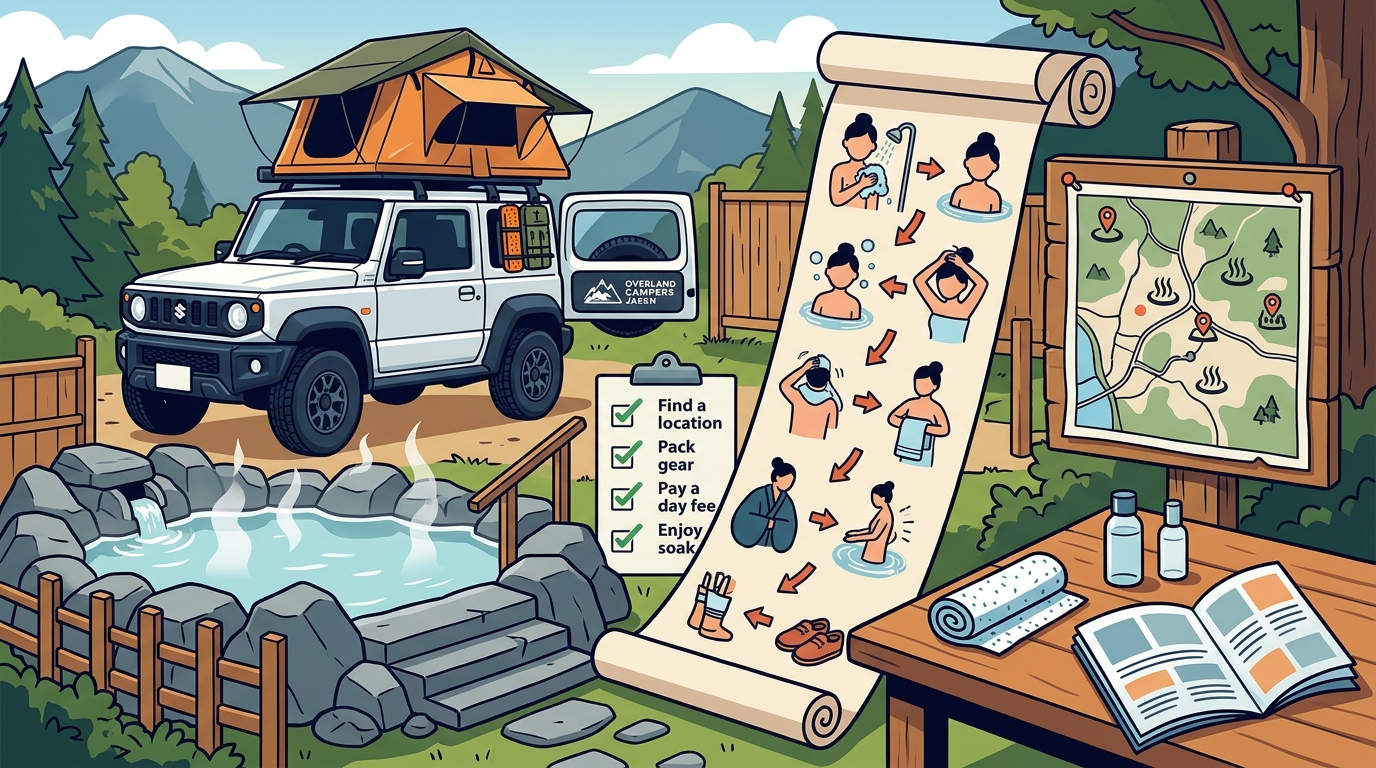
Etiquette is the most critical aspect of using a Japanese onsen. The first rule is to wash your body completely before entering the bath. You will find a shower or a basin with a faucet. Sit on the small stool provided and wash your hair, body, and feet. Use the soap and shampoo provided, but rinse them off completely. Do not let any soap residue enter the bath. This is a sign of respect for the other bathers and the water.
Once you are clean, you can enter the bath. You should sit on the edge of the bath to acclimate to the temperature. The water is often quite hot, so it is important to enter slowly. You can sit in the water for a few minutes, then step out to cool down. This cycle of heating and cooling is the traditional way to enjoy an onsen. Do not stay in the water for too long, as this can lead to dizziness or dehydration. Drink plenty of water before and after your bath.
There are also specific rules regarding tattoos. Many onsen in Japan have a policy against visible tattoos. This is due to historical associations with organized crime. If you have tattoos, you may need to cover them with a bandage or a special tattoo cover. Some facilities are more lenient, but it is best to check in advance. Overland Campers Japan can advise you on which facilities in your area are tattoo-friendly. This ensures you are not turned away at the door and can enjoy the experience without stress.
Integrating Onsen into Your Itinerary
Integrating onsen visits into your camping trip is easy if you plan ahead. A good strategy is to schedule one onsen visit per day. This allows you to relax and recover from the day's driving and hiking. You can combine this with a visit to a local market or a walk in a nearby park. The onsen becomes a central part of your daily routine, providing a moment of peace and reflection.
For those camping in the mountains, the onsen can be a highlight of the trip. The contrast between the cold mountain air and the warm bath is invigorating. Many mountain onsen are open-air, allowing you to bathe under the stars or in the snow. This is a unique experience that you will not find in a city hotel. Overland Campers Japan has curated a list of recommended onsen for each of our routes. These are facilities that we have visited and found to be of high quality and welcoming to international guests.
You should also consider the time of day. Morning baths are often quieter and less crowded. This is a good time to go if you want a peaceful experience. Evening baths are more social and can be a good way to meet other travellers. Choose the time that suits your preference. By integrating onsen into your itinerary, you enhance your camping experience and gain a deeper understanding of Japanese culture.
Key Takeaways
- Wash thoroughly before entering the bath to keep the water clean.
- Do not bring towels or clothing into the water.
- Check the tattoo policy of the facility before you visit.
- Drink plenty of water to stay hydrated during and after the bath.
- Use local tourism boards to find hidden onsen gems.
- Plan your arrival time to avoid crowds and ensure the facility is open.
Frequently Asked Questions
Can I bring my phone into the onsen?
It is generally discouraged to bring phones into the onsen. The environment is meant for relaxation and silence. If you must bring your phone, keep it in a waterproof bag and do not use it in the bath area. Many facilities have a designated area for storing personal items.
What should I do if I have a tattoo?
You should check the facility's policy in advance. Some onsen allow small tattoos if they are covered with a bandage. Others may have a strict no-tattoo policy. Overland Campers Japan can provide a list of tattoo-friendly onsen in the regions we cover.
Are onsen open 24 hours?
No, most onsen are not open 24 hours. They typically operate from early morning until late evening. Some may have extended hours, but you should always check the specific opening times before you visit.
Is it okay to swim in the onsen?
No, swimming is not allowed in the onsen. The baths are for soaking and relaxation, not for exercise. You should sit or stand in the water and avoid splashing or making noise.
How much does it cost to use a public onsen?
Public onsen are usually very affordable, often costing between 300 and 600 yen. This is a small fraction of the cost of a hotel stay. It is a great way to enjoy a luxury experience on a budget.
Start Your Onsen Journey
Exploring Japan's hot springs is a rewarding part of any overland trip. By understanding the etiquette and planning your visits, you can enjoy this unique cultural experience. Overland Campers Japan is here to support you with the right vehicle and the right information. Book your camper today and start your journey into the heart of Japan's thermal culture.