
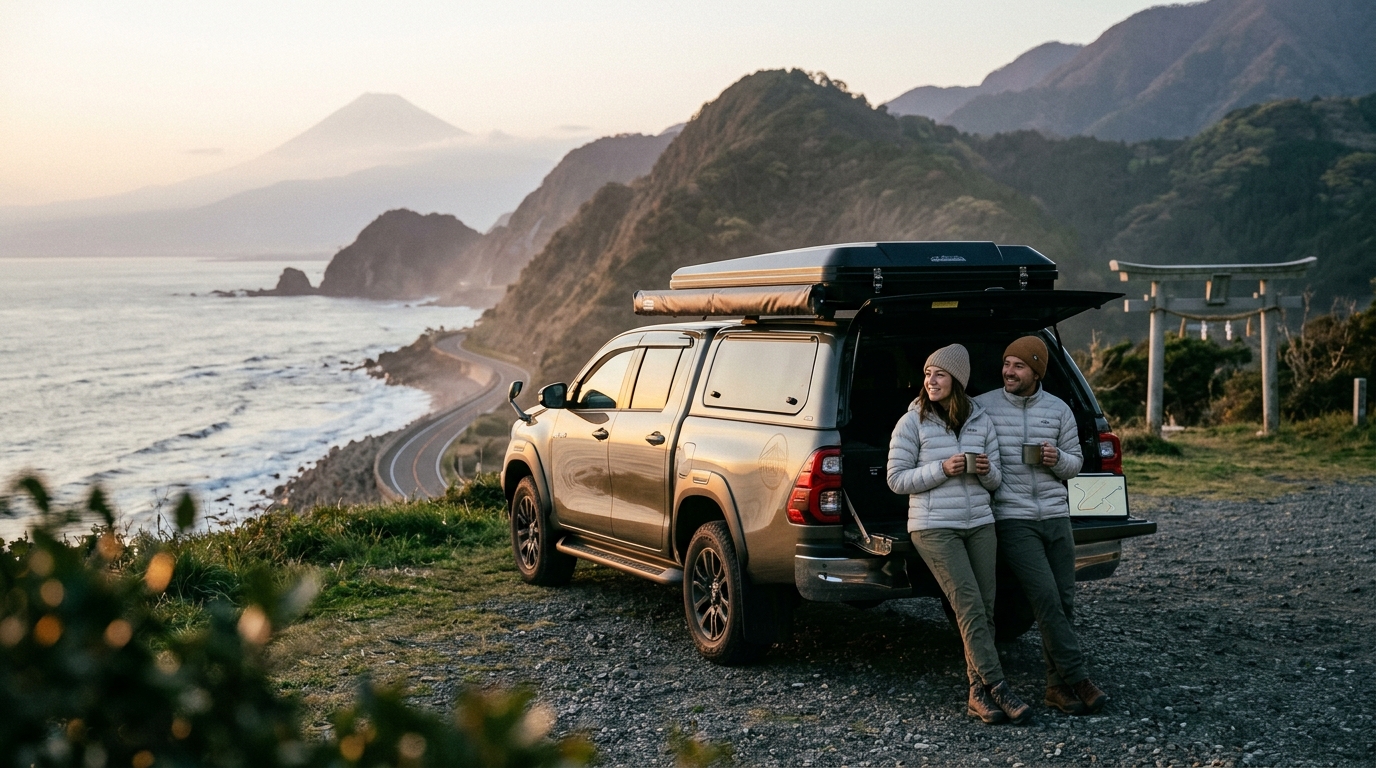
Japan is rapidly becoming one of the most sought-after destinations for overland travel, with the domestic tourism market showing significant recovery and growth in the post-pandemic era. According to recent industry reports on Japanese tourism, the demand for self-drive and camping experiences has surged, fundamentally changing how travelers approach the archipelago. This shift means that selecting the right camper van is no longer just about comfort; it is a logistical necessity that dictates the success of your entire itinerary. The difference between a stressful trip and an unforgettable adventure often comes down to matching your vehicle's capabilities with your chosen route's terrain. (Japan Tourism Industry)
Understanding the Fleet: Vehicle Classes
Before mapping out your journey, you must understand the specific vehicle classes available in the Japanese market. Overland Campers Japan provides a curated selection of four-wheel-drive (4x4) vehicles, each designed for specific types of exploration. These are not standard rental cars; they are custom-built overland rigs equipped with rooftop tents, kitchen systems, and power supplies.
Compact 4x4s represent the entry level of serious overlanding. The Suzuki Jimny Sierra is the quintessential example here. It is a small-footprint vehicle that offers immense agility. Because of its compact size, it can navigate narrow rural roads and steep mountain passes that larger vehicles cannot. However, the trade-off is limited interior space and luggage capacity. This class is ideal for couples or solo travelers who prioritize access to remote trails over luxury.
Mid-Size SUVs offer a balance between capability and comfort. The Toyota FJ Cruiser falls into this category. It provides more interior room for luggage and allows for easier movement inside the vehicle when parked. The FJ Cruiser is known for its robust 4x4 system and reliability, making it a favorite for longer trips where you might spend more time inside the vehicle during inclement weather. It sleeps two comfortably but offers more headroom than the Jimny.
Premium Overland Rigs include vehicles like the Land Rover Defender. These vehicles are built for those who want a higher standard of comfort without sacrificing off-road prowess. The Defender 110S, for instance, offers a longer wheelbase, which translates to a more stable ride on highways and more interior space for camping gear. These vehicles often come with more sophisticated suspension systems, making them suitable for both paved highways and rough gravel tracks.
Route and Terrain Analysis
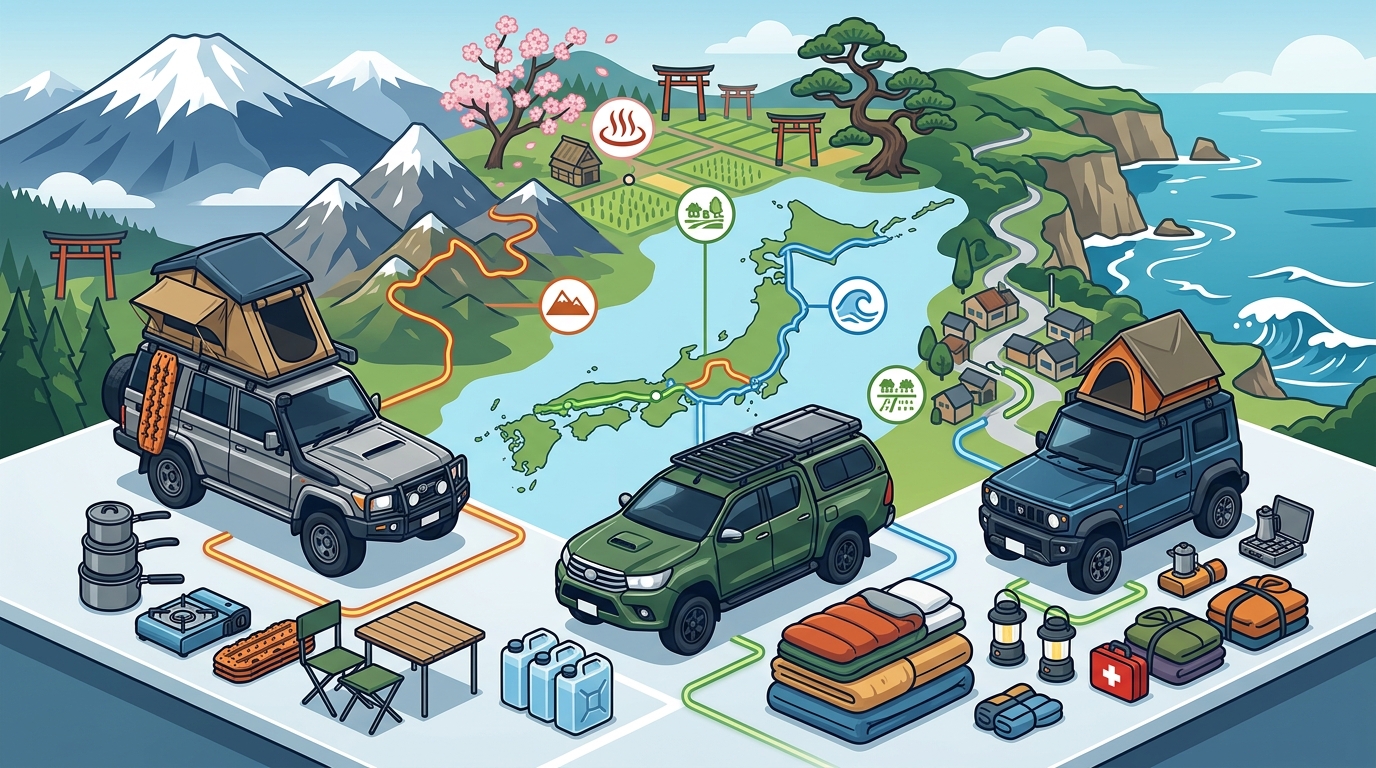
Your choice of vehicle must align with your intended route. Japan's geography is diverse, ranging from dense urban centers to rugged alpine regions and coastal highways. Understanding these distinctions is critical for safety and enjoyment.
Coastal and Highway Routes are generally accessible by most 4x4 vehicles. If your plan involves driving along the Pacific coast or exploring the Kanto region, a mid-size SUV like the FJ Cruiser or a Defender provides a smoother, more comfortable experience. These vehicles handle highway speeds better than compact 4x4s, reducing driver fatigue on long drives.
Mountain and Rural Routes require the agility of a compact 4x4. In regions like Hokkaido or the Japanese Alps, roads can be narrow, steep, and poorly maintained. The Suzuki Jimny's short wheelbase and low center of gravity allow it to tackle these challenges with ease. However, drivers must be cautious of steep gradients and limited passing zones. According to travel safety guidelines, smaller vehicles are often recommended for remote mountain passes where larger trucks might struggle with clearance.
One-Way Travel Considerations add another layer of complexity. Overland Campers Japan offers one-way drop-offs, allowing you to pick up in Tokyo and drop off in Fukuoka, or vice versa. This flexibility enables you to traverse the length of Japan without backtracking. However, one-way rentals often involve specific logistical requirements and may have different pricing structures. You must ensure your vehicle has the range and comfort to cover the distance between your start and end points.
Pick-Up Logistics and Locations
Convenience is a major factor in choosing your camper van provider. Overland Campers Japan operates from two strategic bases: Tokyo and Fukuoka. These locations are chosen for their proximity to major transport hubs and the start of popular overland routes.
Tokyo Base is located in Yutenji and Naka-Meguro. This area is minutes from Shibuya and Shinjuku, making it incredibly convenient for international travelers arriving at Narita or Haneda airports. The Tokyo base serves as the gateway to the Kanto region, Mount Fuji, and the northern routes toward Hokkaido. Being close to the expressway network allows for quick access to the open road.
Fukuoka Base is situated in Fukuma, on the northern coastline of Fukuoka. This location is ideal for travelers starting their journey in Kyushu or those who have already explored Honshu and wish to continue their adventure in the south. Fukuoka Airport is easily accessible, and the base provides quick access to Kyushu's diverse landscapes, from volcanic regions to coastal cliffs.
Vehicle Preparation is handled at these bases. Every vehicle is fully equipped with a rooftop tent, kitchen, and camping gear. This means you do not need to worry about purchasing or packing equipment. The vehicles are inspected and prepared to a high standard before your arrival. This "ready-to-go" model simplifies the planning process significantly.
Vehicle Comparison Matrix
To help you make an informed decision, here is a comparison of the primary vehicles available for rent. This matrix highlights key specifications that influence your travel experience.
| Vehicle Model | Capacity | Best For | Key Feature |
|---|---|---|---|
| Land Rover Defender 110S | 2-3 Sleepers | Premium Comfort & Long Distances | Spacious Interior & Highway Stability |
| Suzuki Jimny Sierra | 2 Sleepers | Off-Road Agility & Narrow Roads | Compact Footprint & 4x4 Capability |
| Toyota FJ Cruiser | 2 Sleepers | Balanced Adventure & Reliability | Robust 4x4 System & Interior Space |
Key Takeaways
- Vehicle Class Matters: Choose the Suzuki Jimny for tight trails and the Defender for comfort and space.
- Route Alignment: Match your vehicle's size to the road conditions of your planned itinerary.
- Strategic Bases: Tokyo and Fukuoka locations offer convenient access to major airports and expressways.
- All-Inclusive Gear: Vehicles come with rooftop tents and kitchen systems, eliminating the need for external equipment.
- One-Way Options: Flexible pick-up and drop-off points allow for linear travel across Japan.
- Booking Early: High demand for overland vehicles means securing reservations well in advance is crucial.
- Driving License: Ensure you have the appropriate license or an International Driving Permit for Japan.
Frequently Asked Questions
Can I pick up a camper van in Tokyo and drop it off in Fukuoka?
Yes, Overland Campers Japan offers one-way rental options between their Tokyo and Fukuoka bases. This allows you to traverse Japan from north to south or vice versa without returning to your starting point. Please check availability for your specific dates as one-way rentals are subject to vehicle logistics.
What is included in the camper van rental?
Every vehicle is fully equipped with a rooftop tent, sleeping mats, kitchen equipment, power supply, and other essential camping gear. You do not need to bring your own tent or cooking utensils. The vehicles are designed to be "ready-to-go" upon pick-up.
Do I need a special driver's license to drive a camper van in Japan?
You need a valid driver's license from your home country and an International Driving Permit (IDP) that corresponds to the vehicle class. For most of the camper vans listed, a standard car license (Class 1) is sufficient. However, larger vehicles may require specific endorsements. Always verify license requirements before your trip.
How far in advance should I book my camper van?
It is highly recommended to book at least 3 to 6 months in advance, especially for peak seasons like cherry blossom season (March-April) and autumn foliage (October-November). Popular vehicles like the Land Rover Defender and Toyota FJ Cruiser are in high demand.
Are the vehicles suitable for snow driving?
Yes, the vehicles are equipped with snow tires during the winter season. However, driving in deep snow requires experience and caution. It is advisable to check road conditions and weather forecasts regularly. Some remote roads may be closed during heavy snowfall.
What is the minimum rental period?
The minimum rental period is typically two days. This allows for a manageable trip duration while covering the logistical costs of vehicle preparation and cleaning. Longer rentals often offer better daily rates.
Can I cancel my reservation?
Cancellations are subject to the company's cancellation policy. Generally, cancellations made well in advance incur lower fees, while last-minute cancellations may result in higher charges. Please review the Rental Terms and Conditions for detailed information.
Book Your Adventure
Choosing the right camper van is the first step toward an unforgettable journey through Japan. Whether you seek the agility of a Suzuki Jimny on mountain trails or the comfort of a Land Rover Defender on coastal highways, Overland Campers Japan provides the tools for your adventure. With bases in Tokyo and Fukuoka, you can start your exploration from the heart of Japan's major cities or its vibrant southern gateway.
Ready to hit the road? Book your camper van today and secure your spot for an unscripted journey across Japan's diverse landscapes.