
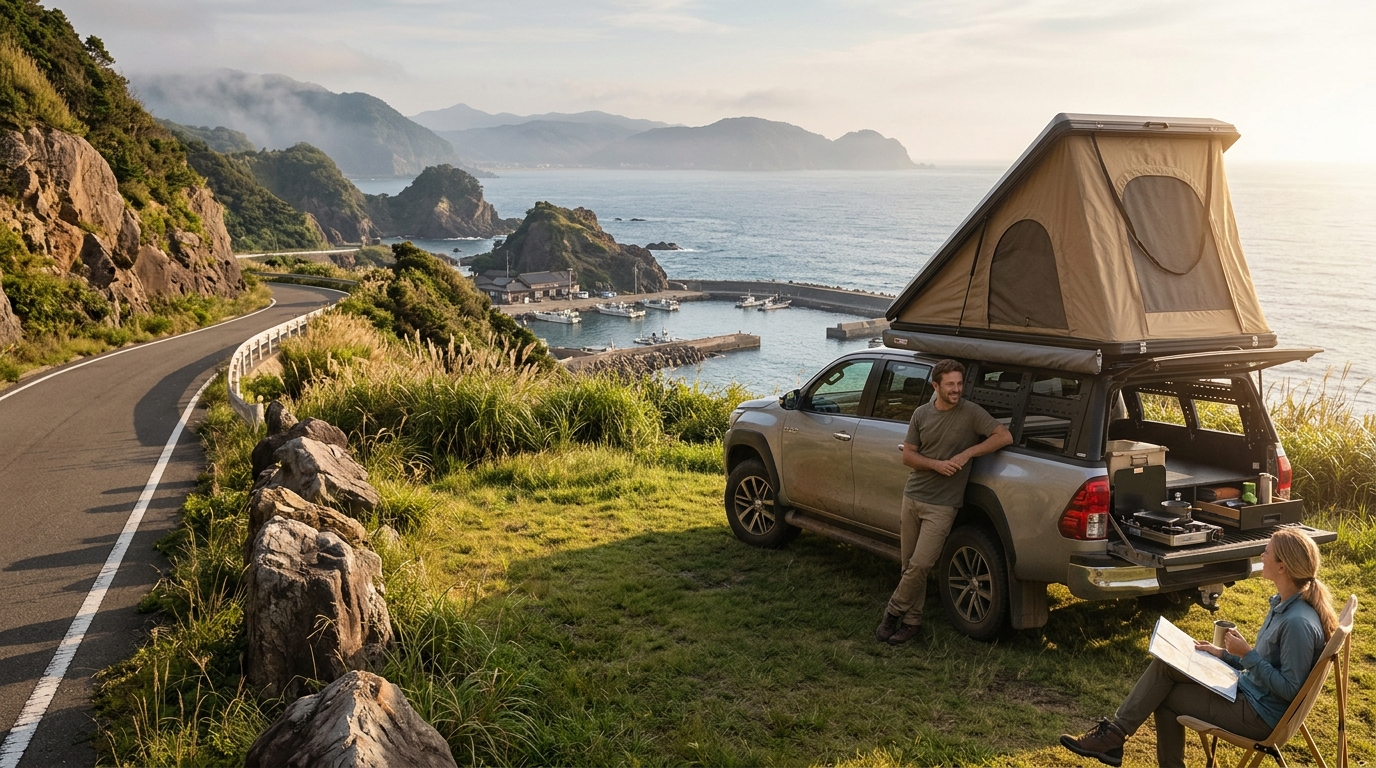
Planning a road trip in Japan is a dream for many international travelers, but the logistics of renting a camper can feel daunting. According to recent tourism data, over 4.6 million foreign visitors explored Japan in the post-pandemic recovery phase, with a significant portion seeking independent travel options. However, misinformation about camper rentals often creates unnecessary barriers. This guide clarifies the reality of 4x4 camper van rentals in Japan, addressing the most common myths and questions from foreign travelers.
Myth 1: You Need a Japanese Driver's License
One of the most persistent myths is that foreign visitors must obtain a Japanese driver's license to rent a vehicle. This is false. Japan accepts the International Driving Permit (IDP) alongside your home country's license for short-term tourism. The IDP must be obtained in your home country before you travel; it cannot be issued in Japan. Most reputable rental companies, including Overland Campers Japan, require both documents to be presented at pickup.
Another misconception involves the type of IDP accepted. Japan is a signatory to the 1949 Geneva Convention on Road Traffic. Therefore, you must have an IDP issued under this specific convention. IDPs issued under the 1968 Vienna Convention are not valid for driving in Japan. This distinction is critical for travelers from countries that primarily use the 1968 standard.
Additionally, some travelers worry about the complexity of the permit application. The process is straightforward and typically takes only a few days in your home country. By ensuring you have the correct 1949 IDP, you can drive confidently across Japan's diverse landscapes, from the mountains of Hokkaido to the coastal roads of Kyushu.
Myth 2: Campers Are Only for Luxury Travelers
Many assume that camper van rentals in Japan are prohibitively expensive or reserved for luxury expeditions. While premium options exist, the market has diversified significantly. Companies like Overland Japan offer compact, fully equipped 4x4 campers that provide excellent value for couples or solo adventurers.
The cost of a camper rental often compares favorably to the combined cost of hotels, car rentals, and dining out. By cooking your own meals in the camper's built-in kitchen and sleeping in a rooftop tent, you save on accommodation and food expenses. This "glamping" style of travel allows for a more authentic and budget-friendly experience.
Furthermore, the all-inclusive nature of modern camper rentals removes hidden costs. Vehicles are typically provided with rooftop tents, kitchenware, power banks, and premium camping gear. There are no surprise add-ons or upgrade fees. This transparency makes camper rentals a financially viable option for mid-range travelers seeking flexibility and comfort.
Myth 3: One-Way Rentals Are Impossible
Historically, one-way rentals in Japan were difficult due to logistical constraints. However, this has changed with the emergence of specialized overland rental networks. Overland Campers Japan now offers one-way drop-offs between their Tokyo and Fukuoka bases. This flexibility allows travelers to design linear itineraries without backtracking.
For example, you can pick up a vehicle in Tokyo, explore the Japanese Alps and Kansai region, and drop it off in Fukuoka to continue your journey in Kyushu. This service is particularly valuable for travelers with limited time who want to maximize their exploration of Japan's main islands.
It is important to note that one-way rentals may have specific availability windows and require advance booking. Planning your itinerary several months in advance ensures you secure your preferred vehicle and drop-off location. The convenience of avoiding long train rides with luggage makes this option highly popular among international visitors.
FAQ: Vehicle Options and Fleet Details
Foreign visitors often ask about the types of vehicles available. The market offers a range of options, from compact 4x4s to larger expedition vehicles. The Suzuki Jimny Sierra is a popular choice for its agility and fuel efficiency. It sleeps two people and is ideal for narrow mountain roads and coastal drives.
For those seeking more space, the Toyota FJ Cruiser offers a robust platform with enhanced comfort. These vehicles are equipped with rooftop tents, kitchen units, and power systems. The choice between a compact Jimny and a larger FJ Cruiser depends on your group size and the terrain you plan to traverse.
Another key consideration is the transmission type. Most camper rentals in Japan are automatic, which is beneficial for drivers unfamiliar with manual gearboxes. This ensures a smoother driving experience, especially in stop-and-go traffic or on steep inclines.
FAQ: Booking and Payment Logistics
The booking process for camper rentals in Japan is typically straightforward. Most companies require an initial enquiry to check availability and receive a quote. Payment is usually processed via bank transfer or international credit card. It is essential to pay within the specified deadline to confirm your reservation.
Cancellation policies vary by provider. Generally, cancellations made well in advance incur a lower fee, while last-minute cancellations may result in a full charge. Travelers should review the cancellation policy carefully before booking. Understanding these terms helps avoid unexpected costs.
Security deposits are also a common requirement. A refundable deposit is often held on a credit card at the time of pickup. This deposit covers potential damages or fuel top-ups. Ensuring your credit card has sufficient limit is crucial for a smooth pickup experience.
FAQ: Driving and Navigation in Japan
Driving in Japan requires attention to specific traffic rules. Vehicles drive on the left side of the road, which may be unfamiliar to visitors from right-hand traffic countries. Speed limits are strictly enforced, and radar detectors are prohibited. Adhering to speed limits is essential to avoid fines.
Navigation in Japan can be challenging due to the complexity of the address system. GPS devices provided with camper rentals are invaluable. They offer real-time directions and point out rest areas, fuel stations, and campsites. Downloading offline maps is also recommended, as cellular service can be spotty in remote areas.
Another important aspect is the use of electronic toll collection systems. Many camper rentals are equipped with ETC cards for easy payment at toll gates. Understanding how to use these cards simplifies long-distance travel. If you are unsure, rental staff will provide a brief tutorial during pickup.
FAQ: Camping and Infrastructure
Camping in Japan is regulated, and wild camping is generally prohibited. Travelers must use designated campsites or parking areas that allow overnight stays. Japan has a well-developed network of campsites, ranging from basic facilities to luxury glamping sites. These campsites often provide water, electricity, and waste disposal services.
Another common question is about water and power. Camper rentals typically include water tanks and battery-powered lighting. However, refilling water and charging devices requires stopping at campsites or service areas. Planning your route around these facilities ensures a comfortable trip.
Waste disposal is also a critical consideration. Most campsites have designated areas for trash and recycling. Following local regulations helps preserve Japan's natural beauty. Travelers should carry small bags for waste until they reach a disposal point.
FAQ: Safety and Emergency Support
Safety is a top priority for camper rental companies. Most providers offer 24-hour roadside assistance. This service covers breakdowns, flat tires, and other mechanical issues. Having this support provides peace of mind, especially when traveling in remote areas.
Another safety aspect is vehicle insurance. Rental agreements typically include basic insurance coverage. However, travelers should understand the deductible and what is covered. Optional insurance upgrades may be available for additional protection. Reviewing the insurance details before departure is essential.
Emergency preparedness also involves knowing local emergency numbers. In Japan, the emergency number for police, fire, and ambulance is 110 and 119. Having these numbers saved in your phone is a simple but effective safety measure. Additionally, carrying a basic first aid kit is recommended.
Key Takeaways
- Valid IDP Required: You must have an International Driving Permit issued under the 1949 Geneva Convention, not the 1968 version.
- One-Way Options: Services like Overland Japan allow one-way rentals between Tokyo and Fukuoka, enabling linear itineraries.
- Fleet Diversity: Options range from the compact Suzuki Jimny Sierra to the spacious Toyota FJ Cruiser, all fully equipped.
- Booking Process: Reservations require an initial enquiry, followed by payment via bank transfer or credit card within a specified deadline.
- Camping Regulations: Wild camping is prohibited; travelers must use designated campsites with proper facilities.
- Safety Support: 24-hour roadside assistance is standard, providing security for mechanical issues or emergencies.
- Driving Side: Japan drives on the left; familiarity with left-hand traffic is essential for safe navigation.
Frequently Asked Questions
Do I need a Japanese driver's license to rent a camper in Japan?
No, you do not need a Japanese driver's license. You must have your home country's driver's license and an International Driving Permit (IDP) issued under the 1949 Geneva Convention. The IDP must be obtained in your home country before traveling.
Can I rent a camper van for one way from Tokyo to Fukuoka?
Yes, several companies offer one-way rentals between Tokyo and Fukuoka. This service allows you to explore different regions without backtracking. It is advisable to book well in advance to secure availability.
What is included in a camper van rental?
Most rentals include a fully equipped vehicle with a rooftop tent, kitchenware, power bank, and premium camping gear. There are typically no hidden fees or required upgrades. The vehicle is ready for immediate use upon pickup.
Are there restrictions on where I can camp?
Wild camping is generally prohibited in Japan. You must use designated campsites or parking areas that permit overnight stays. Japan has a wide network of campsites offering various facilities, from basic to luxury.
How do I pay for the camper rental?
Payment is usually made via Japanese bank transfer or international credit card. A deposit is often required to confirm the booking. The remaining balance is typically paid at pickup or shortly after confirmation.
Is roadside assistance available?
Yes, most reputable camper rental companies provide 24-hour roadside assistance. This service covers breakdowns, flat tires, and other mechanical issues. Contact information is provided in the rental agreement.
What type of vehicle is best for beginners?
The Suzuki Jimny Sierra is often recommended for beginners due to its compact size and ease of handling. It is ideal for narrow roads and offers excellent fuel efficiency. Larger vehicles like the Toyota FJ Cruiser are suitable for those seeking more space.
Start Your Adventure
Ready to explore Japan on your own terms? Avoid the stress of planning and let us handle the details. Book your camper van today and experience the freedom of the open road. Whether you choose Tokyo or Fukuoka as your starting point, your adventure awaits.